

UV or EC? Reducing the investment cost for ballast water treatment
Decyzje dotyczące zarządzania wodą balastową nie powinny być podejmowane automatycznie, zwłaszcza jeśli chodzi o wybór technologii: promieniowanie UV czy elektrochlorowanie (EC). Zadając właściwe pytania, możesz znacznie obniżyć koszty, ryzyko i ograniczenia eksploatacyjne. Dowiedz się, dlaczego oczyszczanie promieniowaniem UV za pomocą systemu Alfa Laval PureBallast 3 to najmądrzejszy wybór w zarządzaniu wodą balastową, nawet na statkach, gdzie elektrochlorowanie jest obecnie standardem.
- Zminimalizuj zajmowaną powierzchnię systemu i zakres modyfikacji statku
- Ogranicz czas spędzony w stoczni i koszty inwestycji
- Unikaj kosztownych, niebezpiecznych i szkodliwych środków chemicznych
- Zmaksymalizuj elastyczność i wydajność eksploatacji
Save CAPEX by reading between the lines
With a UV solution like PureBallast 3, the ballast water treatment system is closely contained – as are your costs. Electrochlorination (EC) means sprawling pipelines, plus the likely repurposing of your aft peak tank (APT) to serve as a source of salt water. Those extra metres and connections extend costs as well as footprint.
UV system (PureBallast 3)
- Fully integrated into existing ballast water flow
- No use of APT – vessel can maintain trim
EC system (full-flow)
- Largely integrated into existing ballast water flow
- APT and piping for salinity control
- Stainless steel (SUS) piping for TRO and neutralization systems
EC system (side-stream/slip-stream)
- Polyethene piping for corrosive hypochlorite flow
- APT and piping for salinity control
- Stainless steel (SUS) piping for heating, TRO and neutralization systems
- Piping to deck to vent hazardous gases
Choose UV treatment to avoid EC’s hidden costs
UV ballast water treatment is a straightforward physical process, without any additives or detours. The ballast water is filtered and exposed directly to UV light, which neutralizes the organisms it contains.EC, on the other hand, is a chemical process– even if the chlorine is produced on board. The chlorine must be added to the ballast water, and any residuals or hazardous gases created have to be removed. Since generating chlorine requires warm saline water, salt and heat may also be needed. In total, there’s a lot of piping and expense that isn’t usually reflected in the system offer.
Read on to see the hidden costs of an EC system.
Costly and longer piping
Unlike UV systems, where the ballast water simply flows through reactors that dose it with UV light, EC ballast water treatment systems require hundreds or thousands of metres of pipes. The complicated piping leads chemicals and water in and out of the ballast water treatment process, but it’s also required for chemical neutralization and sometimes as a safety measure for venting hazardous gases. The pipes extend through large sections of the vessel, especially when the aft peak tank (APT) is used to adjust salinity – which is nearly always the case.
Costly exclusive materials
The length and complexity of the piping in EC ballast water treatment systems is just the first issue. All those metres are multiplied by the material cost. Since the pipes have to withstand seawater and chemicals, many of them have to be lined with polyethene or constructed from stainless steel (SUS). Such materials can take longer for shipyards to acquire and are often far more expensive than standard materials.
More costly valves
Wherever there are pipes for multiple processes, valves are needed to steer the different flows. In an EC ballast water treatment system, there are flows for moving chemicals, heating the water, adding salinity and neutralizing total residual oxidants (TRO) – to name a few. The valves required are costly in themselves, but they’re also additional points of complexity that need maintenance and could potentially fail.
More costly support components
Due to the piping, valves and extensive layout, an EC ballast water treatment system can be much more complicated to engineer than a UV system, which is compact and localized. Additional structures must be built to support the different parts of an EC system, which may also comprise heaters, gas detectors and other components not reflected in the supplier’s scope.
Installation time and costs
The more complicated a ballast water treatment system is, the more work it is for a shipyard to install it. When installing an EC system, you pay for the added complexity in two ways: the labour cost from the shipyard and the time out of service for your vessel. By choosing a UV system rather than an EC system, you can save many days of shipyard work.
Want a deeper understanding?
To learn more about the issues above and why they matter for your choice of ballast water treatment technology, be sure to download our short guide.
Comparing UV and EC investment cost
Get a quick and clear understanding of how your choice of ballast water treatment technology impacts your system investment. Our short guide explains the hidden complexities of electrochlorination (EC) systems and shows why UV solutions like PureBallast 3 are simpler and more cost-efficient when it comes to procurement and installation.
Shipowner insights into installation cost
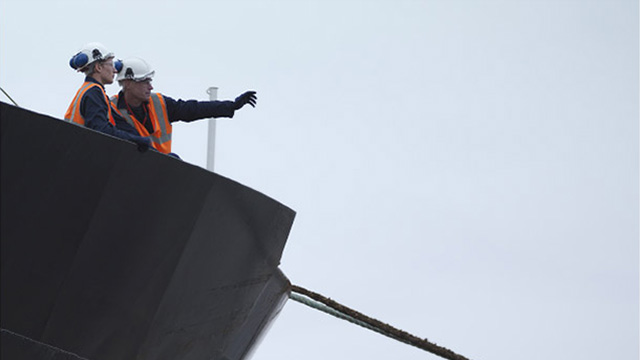
Millenia Maritime Inc. has chosen UV ballast water treatment with PureBallast 3 for its fleet of MR tankers, rather than electrochlorination (EC). The choice has saved both time and money at the shipyard.
“We got very good installation results on all of our vessels, but we also secured a competitive time to market,” says General Manager Francesco Ricciardi. “In the cost-benefit analysis for the project, spending less time at the shipyard has high value. Every day the vessel is in the water is a day that it can be making money.”
Contact us to discuss the choice of UV or EC
Your choice of technology may be the most important one you make in ballast water management. We’d be happy to discuss it with you, in brief or in depth.